
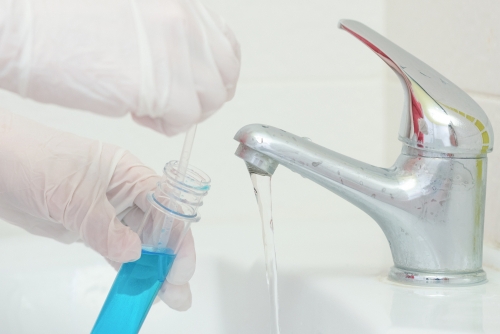
Signs Your Water Needs Laboratory Testing
Every single day, we rely heavily on the water coming from our taps. We drink it to stay hydrated, use it to wash fresh food, rely on it to cook meals, and clean our bodies and homes with it. Because water is so central to our daily routines, it is easy to take its safety for granted. We open the valve, a clear stream flows out, and we assume everything is perfectly fine.
However, water quality can change over time. Whether your property is connected to a public municipal system or relies entirely on a private well, changes in taste, color, odor, or physical performance inside your home can indicate an underlying water-quality problem.
While some potentially harmful contaminants are completely invisible, your plumbing system and your senses may provide useful warning signs. Recognizing these changes can help you identify problems earlier and potentially avoid health concerns or expensive infrastructure repairs.
Professional water quality testing provides measurable information about what is actually present in the water rather than relying only on appearance, taste, or smell.
1. Clear Visual Changes: Discoloration and Cloudiness
One of the most immediate warning signs that something may have changed in your water supply is a shift in its physical appearance.
Drinking water is generally expected to be clear. If you begin noticing distinct colors, cloudiness, or suspended particles, the cause may deserve investigation.
Brown, Orange, or Red Tints
If your tap water develops a rusty, reddish-brown, or orange tint, possible causes include:
- Iron
- Manganese
- Rust
- Sediment
- Aging plumbing
- Disturbances within water mains
Iron-rich water can also leave orange or reddish stains on:
- Porcelain sinks
- Toilets
- Bathtubs
- Tiled showers
- Laundry
Changes can originate from the source water itself or from corrosion and sediment within plumbing or distribution infrastructure.
Laboratory testing can help distinguish between these possibilities.
Blue or Green Staining
Greenish-blue stains around faucets, drains, or porcelain fixtures can sometimes be associated with copper corrosion.
Water chemistry—including pH, alkalinity, mineral content, and other factors—can influence how aggressively water interacts with plumbing materials.
The EPA explains that corrosion of plumbing materials can cause metals to enter drinking water, particularly when water chemistry promotes corrosion.
Over time, corrosion may contribute to:
- Elevated copper concentrations
- Plumbing deterioration
- Metallic taste
- Pinhole leaks
A simplified progression may look like this:
Corrosive Water Chemistry → Copper Pipe Corrosion → Blue-Green Staining → Possible Plumbing Damage
Testing pH, alkalinity, copper, and other relevant parameters can help determine whether water chemistry is contributing to the problem.
Cloudy or Milky Appearance
If water looks milky when first poured but becomes clear after sitting in a glass for several minutes, trapped air bubbles may be responsible.
However, persistent cloudiness—or turbidity—can indicate suspended material such as:
- Fine sediment
- Clay
- Organic particles
- Rust
- Other suspended solids
High turbidity can also interfere with certain water-treatment and disinfection processes.
Persistent turbidity should therefore be investigated rather than assumed to be harmless.
2. Strong Scent and Flavor Red Flags
Taste and smell can sometimes detect changes in water chemistry before other problems become obvious.
However, they should be treated as warning indicators rather than proof of a particular contaminant.
The Rotten Egg Odor
A strong rotten-egg smell is commonly associated with hydrogen sulfide gas.
Hydrogen sulfide may occur naturally in groundwater or develop within certain water-heating systems.
Possible causes can include:
- Groundwater chemistry
- Sulfur-related bacteria
- Water-heater conditions
- Plumbing conditions
The odor may be only an aesthetic problem in some situations, but hydrogen sulfide can also contribute to corrosion.
Testing can help determine whether the problem exists in:
- The incoming water
- Hot water only
- The water heater
- The broader plumbing system
A Sharp Metallic Taste
Water that suddenly develops a metallic taste may be associated with:
- Iron
- Copper
- Zinc
- Manganese
- Plumbing corrosion
Changes in water chemistry, infrastructure maintenance, or internal plumbing can sometimes alter metal concentrations.
Because taste cannot identify which metal is present or at what concentration, laboratory analysis is needed for confirmation.
3. Physical Performance Problems Around the House
Sometimes warning signs appear not in the drinking glass itself, but in the way water interacts with:
- Plumbing
- Soap
- Fixtures
- Water heaters
- Household appliances
Rock-Hard White Scale Build-Up
If you regularly remove thick, chalky white deposits from:
- Showerheads
- Faucets
- Kettles
- Glass shower doors
- Water-heating equipment
you may have hard water.
The U.S. Geological Survey explains that water hardness is primarily associated with dissolved calcium and magnesium.
When hard water is heated, calcium carbonate deposits can form.
A simplified example is:
Hard Water → Mineral Deposits → Scale Inside Pipes and Heating Equipment → Reduced Equipment Performance
USGS notes that scale associated with hard water can build up inside pipes and water-heating equipment and may reduce equipment life.
Hard water is generally considered more of an operational and aesthetic issue than a direct drinking-water health hazard, but it can create expensive household problems over time.
Soap That Refuses to Lather
Another common sign of hard water is difficulty getting soap or detergent to lather properly.
You may notice:
- Shampoo produces less foam
- Soap leaves residue
- Laundry feels stiff
- Glassware develops mineral spots
- Cleaning requires more detergent
Rather than guessing at the degree of hardness, laboratory testing can measure hardness accurately—commonly reported as mg/L as calcium carbonate or sometimes converted to grains per gallon.
This information can help determine whether water-softening treatment is actually needed and how it should be configured.
4. The Critical Target: Evaluating Invisible Dangers
It is extremely important to understand that many significant drinking-water contaminants have no obvious taste, smell, or color.
Potential examples include:
- Lead
- Arsenic
- Nitrates
- Certain bacteria
- PFAS
- Volatile organic compounds
- Radionuclides in certain regions
For this reason, relying only on your senses cannot confirm that water is safe.
Appropriate laboratory analysis should use recognized analytical methods suited to the contaminant being investigated.
Understanding the professional water testing process can help homeowners see how proper sampling, preservation, analysis, quality control, and reporting work together.
Some important hidden concerns include:
Lead Leaching
Lead can enter drinking water through corrosion of plumbing materials containing lead.
EPA states that common sources can include:
- Lead service lines
- Faucets
- Fixtures
- Older plumbing components
You can learn more through the EPA’s lead in drinking-water guidance.
Lead generally cannot be detected through taste, odor, or appearance.
Nitrate Contamination
Nitrates can enter groundwater from:
- Fertilizers
- Septic systems
- Animal waste
- Agricultural activity
Private wells in agricultural areas can be particularly important to monitor.
The CDC recommends annual private-well testing for total coliform bacteria, nitrates, total dissolved solids, and pH.
Bacterial Contamination
Microorganisms can enter water through:
- Damaged well casings
- Floodwater
- Septic-system problems
- Surface contamination
- Distribution-system failures
Common microbiological indicators include:
- Total coliform bacteria
- E. coli
These organisms cannot reliably be identified by sight or smell.
5. Critical Environmental and External Triggers
You do not always need to wait for a visible symptom before considering water testing.
Certain environmental events can provide a strong reason to investigate water quality.
Recent Flooding or Heavy Runoff
If your property relies on a private well and the surrounding area experiences flooding or unusually heavy rainfall, contaminated surface water may reach or surround the well.
Possible contaminants include:
- Bacteria
- Sewage
- Sediment
- Animal waste
- Agricultural chemicals
The CDC provides specific guidance for wells following flooding and other emergencies, including disinfection and follow-up testing.
CDC also recommends routine annual private-well testing even when no emergency has occurred.
Neighboring Industrial or Agricultural Activity
Changes in surrounding land use can also influence groundwater risk.
Examples include:
- Increased fertilizer application
- Pesticide use
- New industrial activity
- Construction
- Fuel storage
- New septic systems
- Waste disposal
A simplified risk pathway may look like this:
Heavy Rain or Flooding → Consider Bacteria and Nitrate Testing
Construction or Ground Disturbance → Consider Turbidity and Locally Relevant Contaminants
Plumbing or Service-Line Changes → Consider Lead, Copper, and Water-Chemistry Testing
The exact testing panel should always reflect the realistic contamination sources around the property.
Local Geology Can Change the Risk Profile
Water quality can vary considerably from one location to another.
Regional differences may include:
- Groundwater hardness
- Naturally occurring arsenic
- Iron and manganese
- Agricultural nitrate contamination
- Industrial contaminants
- Plumbing infrastructure
- Salinity
Property owners seeking testing support appropriate to their geographic area can review available water testing service locations.
Local health departments and environmental agencies may also provide useful information about contaminants known to occur in a particular county or region.
What About Legionella?
General household drinking-water testing and Legionella testing serve different purposes.
Legionella becomes particularly relevant in certain human-made water systems where conditions may support bacterial growth.
These conditions can include:
- Warm water
- Stagnation
- Biofilm
- Sediment
- Complex plumbing systems
Understanding where Legionella can grow can help homeowners, landlords, and property managers recognize when this specialized microbiological concern may need consideration.
Where Legionella analysis is specifically warranted, dedicated Legionella testing services may be appropriate as part of a broader water-management or investigation program.
Why Laboratory Science Provides More Information Than Basic DIY Kits
When homeowners notice one of these warning signs, it can be tempting to purchase an inexpensive DIY water test strip.
Home kits can be useful for preliminary screening of certain basic parameters, such as:
- pH
- Hardness
- Chlorine
- Nitrates
However, they also have limitations.
These can include:
- Limited contaminant coverage
- User error
- Lower sensitivity
- Difficult color interpretation
- Lack of laboratory quality-control procedures
Many contaminants require specialized instruments and contaminant-specific analytical methods.
Professional laboratory analysis may use:
- ICP-MS for certain metals
- Chromatography for certain chemical contaminants
- Microbiological methods for bacteria
- Other specialized techniques
Working with an appropriate professional water testing laboratory can provide quantitative results rather than broad visual estimates.
For regulatory or compliance-related testing, property owners should also confirm that the laboratory has the certification or accreditation required by the relevant authority.
Turning Uncertainty Into Clarity
Paying attention to changes in:
- Water appearance
- Odor
- Taste
- Plumbing
- Fixtures
- Appliances
is an important part of maintaining a property.
These warning signs can tell you that something may have changed, but they usually cannot identify the exact cause.
Laboratory testing can provide measurable information about the specific parameters analyzed and help determine whether further investigation or treatment is necessary.
Rather than selecting treatment equipment based on guesswork, results can help guide decisions involving:
- Plumbing repairs
- Water softening
- Filtration
- Well maintenance
- Additional testing
- Follow-up monitoring
For answers to common questions about sample collection and laboratory analysis, property owners can review the water testing FAQ.
Additional water testing articles and resources can also help explain common contaminants and water-quality problems.
The goal is not to assume that every unusual sign means the water is dangerous. Instead, the goal is to recognize when there is enough evidence to justify further investigation.
If you notice a persistent change in your water or want to determine which analyses are appropriate for your property, you can contact a professional water testing laboratory to discuss your water source, plumbing, location, and specific concerns.