
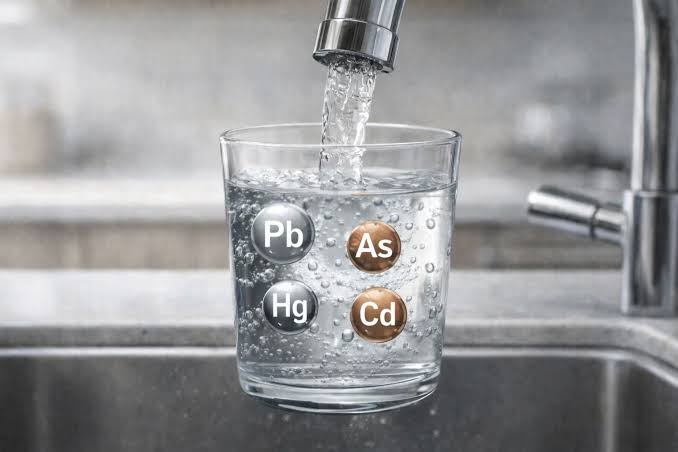
Heavy Metals in Water: Risks and Testing Methods
Heavy metals and related toxic elements in water are among the most important forms of chemical contamination to monitor. Unlike many organic pollutants, metals are elements and do not break down into harmless substances over time. They can persist in water systems, sediments, soil, and living organisms.
Because contaminants such as lead, arsenic, mercury, cadmium, and chromium may be present without causing obvious changes in water appearance, taste, or odor, laboratory analysis is often necessary to determine whether they are present and at what concentration.
A professional water testing laboratory can help property owners, businesses, industrial facilities, and organizations identify relevant contaminants and select appropriate analyses for their water source.
This article explains what heavy metals are, how they enter water systems, the risks associated with exposure, and the laboratory methods used to detect them.
What Are Heavy Metals in Water?
The term “heavy metals” is commonly used to describe a group of metals and related elements associated with environmental or health concerns when present at certain concentrations.
Commonly analyzed elements include:
- Lead
- Arsenic
- Mercury
- Cadmium
- Chromium
- Nickel
- Copper
- Iron
Some of these elements are required by the body in small amounts, while others have no known beneficial biological role. Their significance depends on the specific element, concentration, duration of exposure, and intended use of the water.
Laboratory testing determines the concentration present so that results can be evaluated against applicable standards or guidance values.
How Heavy Metals Enter Water Systems
Metals and metalloids can enter water through both natural processes and human activities.
Natural Sources
Natural sources may include:
- Weathering of rocks and soil
- Mineral deposits
- Groundwater movement through geological formations
- Natural erosion
- Volcanic activity in certain regions
Arsenic is an important example. The World Health Organization’s information on arsenic explains that contaminated groundwater is an important source of human exposure to inorganic arsenic in many areas.
Industrial Sources
Industrial activities that may contribute to metal contamination include:
- Mining
- Metal processing
- Smelting
- Manufacturing
- Chemical production
- Improper wastewater disposal
The contaminants of concern vary according to the industry and surrounding environment.
Agricultural Sources
Agricultural activities may introduce or mobilize certain metals through:
- Fertilizers
- Pesticides
- Irrigation
- Soil amendments
- Contaminated runoff
Water sources near agricultural areas may therefore require testing based on local land-use conditions.
Urban and Plumbing Sources
Within developed areas, metals may enter water through:
- Corroding plumbing
- Lead-containing service lines or fixtures
- Stormwater runoff
- Landfill leachate
- Wastewater
- Industrial activities
Lead is particularly important because contamination may occur after treated water enters a distribution or building plumbing system.
The EPA’s information about lead in drinking water explains that lead can enter drinking water when plumbing materials containing lead corrode.
Why Heavy Metals Can Be Dangerous
The health effects associated with metals depend on several factors, including:
- The specific element
- Concentration
- Duration of exposure
- Route of exposure
- Age and individual susceptibility
Certain metals can accumulate in the body or affect multiple organ systems following repeated exposure.
Potential concerns associated with different metals can include effects on:
- The nervous system
- Kidneys
- Cardiovascular system
- Development
- Bones
- Other organs and biological processes
Because symptoms may not immediately reveal the source of exposure, laboratory testing provides an objective way to measure metal concentrations in water.
Health Risks of Common Metals
Lead
Lead exposure is particularly concerning for children because the developing nervous system is highly sensitive to its effects.
The World Health Organization’s lead poisoning guidance explains that young children are especially vulnerable to lead and that exposure can affect the brain and nervous system.
Lead in drinking water is commonly associated with corrosion of:
- Lead service lines
- Plumbing materials
- Faucets
- Fixtures
- Solder
Because lead contamination can occur within plumbing, testing water at the point of use may provide useful information about actual exposure conditions.
Arsenic
Arsenic can occur naturally in groundwater in some geological regions.
Long-term exposure to elevated inorganic arsenic through drinking water has been associated with significant health effects. WHO identifies long-term exposure as being associated with conditions including skin lesions, cardiovascular effects, and increased cancer risk.
Testing is especially important for private wells in areas where naturally occurring arsenic is known to be present.
Mercury
Mercury can enter environmental water through industrial processes, mining, atmospheric deposition, and other sources.
Different forms of mercury behave differently in the environment, making appropriate analytical methods important when investigating suspected contamination.
Cadmium
Cadmium may be associated with:
- Industrial waste
- Metal processing
- Batteries
- Fertilizers
- Mining activities
Long-term exposure can particularly affect the kidneys and other body systems.
Chromium
Chromium can occur naturally or enter water through industrial activities.
Different chemical forms of chromium have different toxicological characteristics, so the analytical requirements may depend on what type of chromium needs to be measured.
Copper
Copper is an essential nutrient in appropriate amounts but excessive levels can create water-quality and health concerns.
Elevated copper in drinking water can sometimes be associated with corrosion of copper plumbing.
Environmental Impact of Heavy Metals
Metal contamination can also affect aquatic environments.
Effects on Aquatic Organisms
Depending on the element and concentration, contamination may affect:
- Fish
- Invertebrates
- Aquatic plants
- Microorganisms
- Other aquatic organisms
Possible effects can include changes in growth, reproduction, behavior, and survival.
Sediment Contamination
Metals can become associated with sediments in rivers, lakes, reservoirs, and other water bodies.
Changes in environmental conditions can sometimes affect the mobility and availability of contaminants stored in sediment.
Movement Through Food Webs
Certain contaminants can accumulate in organisms and move through food webs.
The environmental behavior differs considerably between elements, so site-specific laboratory testing and environmental assessment may be required to understand the actual risk.
Because geology, industry, agriculture, and infrastructure differ by region, reviewing available water testing service locations can help identify testing resources relevant to local conditions.
Key Heavy Metals Commonly Tested in Water
Lead (Pb)
Lead testing may be important for:
- Older homes
- Buildings with older plumbing
- Properties with lead service lines
- Schools and childcare facilities
- Locations where plumbing corrosion is suspected
Sampling procedures are important because lead concentrations can vary depending on the plumbing system and how the sample is collected.
Arsenic (As)
Arsenic analysis is particularly relevant for:
- Private wells
- Groundwater supplies
- Areas with known geological arsenic
- Locations with previous elevated results
In U.S. public drinking-water systems, EPA regulates arsenic under federal drinking-water requirements.
Mercury (Hg)
Mercury testing may be appropriate when water could be affected by:
- Industrial activities
- Mining
- Contaminated sediments
- Environmental pollution
Cadmium (Cd)
Potential sources include:
- Industrial discharges
- Mining
- Metal processing
- Certain agricultural inputs
Chromium (Cr)
Chromium may be investigated around industrial areas or other locations where contamination is suspected.
Nickel (Ni)
Nickel can originate from natural geology, industrial activities, metal processing, or certain plumbing materials.
Copper (Cu)
Copper testing can help investigate:
- Plumbing corrosion
- Unusual taste
- Staining
- Water chemistry capable of affecting pipes
How Heavy Metals Are Detected in Water
Detecting metals accurately can require sensitive laboratory instrumentation because relevant concentrations may be very small.
Understanding the water testing process can help customers know what to expect from sample collection through laboratory analysis and reporting.
1. Atomic Absorption Spectroscopy (AAS)
Atomic Absorption Spectroscopy is an established laboratory technique used to measure concentrations of specific metals.
The technique measures the absorption of light by atoms of the element being analyzed.
2. Inductively Coupled Plasma Mass Spectrometry (ICP-MS)
ICP-MS is a highly sensitive analytical technique capable of measuring multiple elements at very low concentrations.
It can be useful when:
- Multiple metals need to be analyzed
- Low detection limits are required
- Trace-level contamination is being investigated
3. Inductively Coupled Plasma Optical Emission Spectrometry (ICP-OES)
ICP-OES is another multi-element technique used for analyzing metals in water and other environmental samples.
The appropriate technique depends on:
- Required detection limits
- Metals being analyzed
- Sample characteristics
- Regulatory requirements
- Purpose of testing
4. Screening Methods
Portable or colorimetric methods may sometimes provide preliminary screening for selected metals.
However, when results will be used for health, regulatory, environmental, or important treatment decisions, appropriate professional laboratory analysis is generally preferable.
Why Professional Laboratory Testing Is Important
Metal concentrations can occur at levels requiring sensitive analytical equipment and carefully controlled laboratory methods.
Professional analysis may provide:
- Low detection limits
- Quantitative measurements
- Multi-element analysis
- Quality-control procedures
- Documented results
- Data suitable for comparison with applicable standards
Proper sample collection and preservation are also important.
Different tests may require:
- Specific sample containers
- Preservation procedures
- Defined holding times
- Particular sampling locations
Following laboratory instructions helps reduce the risk of results being affected by improper sampling or handling.
Importance of Testing Standards
Standardized or validated analytical procedures help ensure that results are:
- Accurate
- Reproducible
- Comparable over time
- Appropriate for the intended purpose
- Useful for regulatory or water-management decisions
The selected method should be capable of detecting the contaminant at concentrations relevant to applicable standards or investigation goals.
Laboratory quality assurance may also include:
- Calibration
- Blanks
- Control samples
- Reference materials
- Duplicate analyses
- Other method-specific quality controls
For answers to common questions about laboratory procedures and sample requirements, the water testing FAQ provides additional guidance.
Heavy Metals in Drinking Water Systems
Drinking-water contamination can occur at the source or within the distribution and plumbing system.
Potential sources include:
- Natural groundwater conditions
- Industrial contamination
- Corroding pipes
- Plumbing fixtures
- Treatment issues
- Environmental pollution
Lead is particularly associated with plumbing materials, while arsenic may be naturally present in groundwater in certain regions.
For U.S. public water supplies, the EPA’s chemical contaminant regulations provide information about regulated contaminants including arsenic and other inorganic substances.
Private well owners generally need to arrange their own testing because individual wells are not managed in the same way as public water systems.
Heavy Metals in Groundwater
Groundwater can contain naturally occurring elements released from rocks and minerals.
Potential concerns may include:
- Arsenic
- Iron
- Manganese
- Other region-specific metals
Groundwater chemistry varies considerably according to geology.
This is why testing recommendations should take local environmental conditions into account rather than relying on one universal testing panel.
Routine analysis can also help identify changes in a well’s water quality over time.
Industrial Importance of Heavy Metal Testing
Industries may need to monitor metals in:
- Raw water
- Process water
- Cooling systems
- Wastewater
- Effluent
- Environmental monitoring points
Testing can support:
- Regulatory compliance
- Process control
- Treatment-system management
- Environmental protection
- Investigation of contamination
The appropriate monitoring schedule depends on the industry, water source, permit requirements, and processes involved.
Heavy Metals vs. Microbiological Contamination
Heavy-metal contamination is chemical rather than microbiological.
This distinction matters because different contaminants require different testing methods and control strategies.
For example, a metal analysis designed to detect lead or arsenic will not determine whether Legionella bacteria are present.
Facilities with building water-system concerns may therefore require separate Legionella testing services in addition to chemical analysis.
Similarly, understanding where Legionella can grow can help facility managers distinguish microbiological water-system risks from chemical contaminants such as metals.
A comprehensive testing program should therefore be based on the specific risks associated with the water source and system.
How Often Should Heavy Metal Testing Be Done?
There is no single testing frequency appropriate for every water source.
Testing frequency should consider:
- Water source
- Previous laboratory results
- Local geology
- Nearby industrial activity
- Agricultural activity
- Plumbing materials
- Regulatory requirements
- Changes in surrounding land use
Additional testing may be appropriate:
- After changes in water quality
- Following flooding
- After plumbing modifications
- When contamination is discovered nearby
- When previous testing finds elevated concentrations
- After changes to treatment systems
Private wells in areas with known arsenic or other naturally occurring contaminants may require particular attention.
Building a Heavy Metal Monitoring Program
A long-term monitoring program can help identify changes that may not be obvious from a single test.
An effective program may include:
- Appropriate sampling locations
- Consistent laboratory methods
- Regular testing intervals
- Historical result comparison
- Documentation of treatment changes
- Follow-up testing after unusual results
Tracking results over time can help distinguish isolated findings from persistent or increasing contamination.
Additional water testing resources and articles can help property owners and facility managers understand testing procedures, contamination risks, and water-quality monitoring.
Final Thoughts
Heavy metals and other toxic elements in water can present important health, operational, and environmental concerns because they may be present without producing obvious changes in color, taste, or odor.
Potential contaminants such as lead, arsenic, mercury, cadmium, chromium, nickel, and copper can enter water through natural geology, industrial activities, agriculture, environmental pollution, or plumbing systems.
Laboratory techniques such as AAS, ICP-OES, and ICP-MS allow these elements to be measured at concentrations appropriate for water-quality assessment.
The most effective testing strategy should reflect:
- The water source
- Local geology
- Plumbing conditions
- Surrounding land use
- Previous laboratory findings
- Intended water use
- Applicable requirements
Regular monitoring can help identify changes early and provide reliable data for treatment, maintenance, regulatory, and water-management decisions.
If you need help determining which metals should be included in your testing panel, you can contact a professional water testing laboratory to discuss your water source, location, potential contamination risks, and laboratory testing requirements.